
Most DeFi losses do not begin with a dramatic hack. They begin with a normal-looking approval, swap, or liquidity action that the user never fully understood. The counterintuitive part is that a wallet can display a valid transaction while still failing to explain its economic consequences. In a market where automated bots compete to reorder, sandwich, or backrun transactions, “the transaction succeeded” is a very low standard.
That is why MEV protection and transaction simulation belong in the same conversation. MEV, or maximal extractable value, describes value captured by parties able to influence transaction ordering or react quickly to pending transactions. A wallet cannot eliminate every form of MEV, and no interface can predict the future perfectly. But it can give the user a better view of what a transaction is likely to do before an irreversible signature is authorized.
The useful distinction: validity is not safety
Blockchains primarily answer a narrow question: does this transaction satisfy the rules of the protocol? If the answer is yes, it may be executed. That does not mean the user received a fair price, interacted with the intended contract, or avoided an unexpectedly broad token approval.
Consider a token swap. A basic wallet may show the destination contract and the amount of gas required. A more informative interface can inspect the intended call and estimate the resulting token balances, approvals, fees, and possible warnings. This is transaction simulation: a preview of state changes produced by executing the transaction against a recent blockchain state, without actually committing it on-chain.
The word “simulation” can sound more definitive than it is. It is not a crystal ball. The real transaction may execute in a different block, after another trade changes liquidity, or under a different gas and ordering environment. Still, simulation changes the user’s position from blind authorization to conditional inspection. That is a substantial improvement.
How MEV creates risk for ordinary DeFi users
MEV is often discussed as if it were only a professional trading concern. In reality, any user submitting a visible transaction to a public network may expose information about an intended action. A bot may observe a large swap and place transactions around it, potentially worsening the user’s execution price. Other strategies involve arbitrage, liquidations, or reordering transactions so that someone else captures an opportunity first.
The mechanism matters because “use a reputable wallet” is not the same as “the wallet prevents MEV.” A wallet controls the signing experience and may help identify suspicious behavior. It generally does not control the entire block-building process, the liquidity conditions of every decentralized exchange, or the incentives of third-party infrastructure.
There are several layers of defense, each with a different trade-off. Slippage limits can prevent a swap from executing below a chosen threshold, but setting them too tightly can cause failure in volatile markets. Private transaction routing may reduce exposure to a public pending pool, but availability, trust assumptions, fees, and chain support vary. Limit orders or intent-based systems can specify desired outcomes more clearly, though they introduce their own execution and counterparty considerations. Wallet-level warnings and simulations sit earlier in the process: they help the user decide whether to sign at all.
What a strong simulation should reveal
A useful simulation is not merely a green check mark. It should help the user answer practical questions: Which assets leave my wallet? Which assets arrive? Is a new allowance being granted? Does the call interact with the contract I expected? Could the transaction affect positions, collateral, or ownership? Are the estimated results consistent with the action described by the decentralized application?
This is especially important for approvals. Many users focus on the immediate swap and overlook the permission being granted to a token contract or spending contract. An approval can be more consequential than the transaction that follows it, particularly when the allowance is broad or remains active. A wallet that surfaces the approval clearly is teaching users to distinguish a one-time action from an ongoing permission.
Simulation also helps with contract complexity. DeFi transactions frequently bundle multiple calls: approve, swap, deposit, stake, borrow, or provide liquidity. The user may see one button in a website while the blockchain receives a sequence of instructions. The security question is therefore not “Does this website look familiar?” but “What state changes will this collection of calls attempt to produce?”
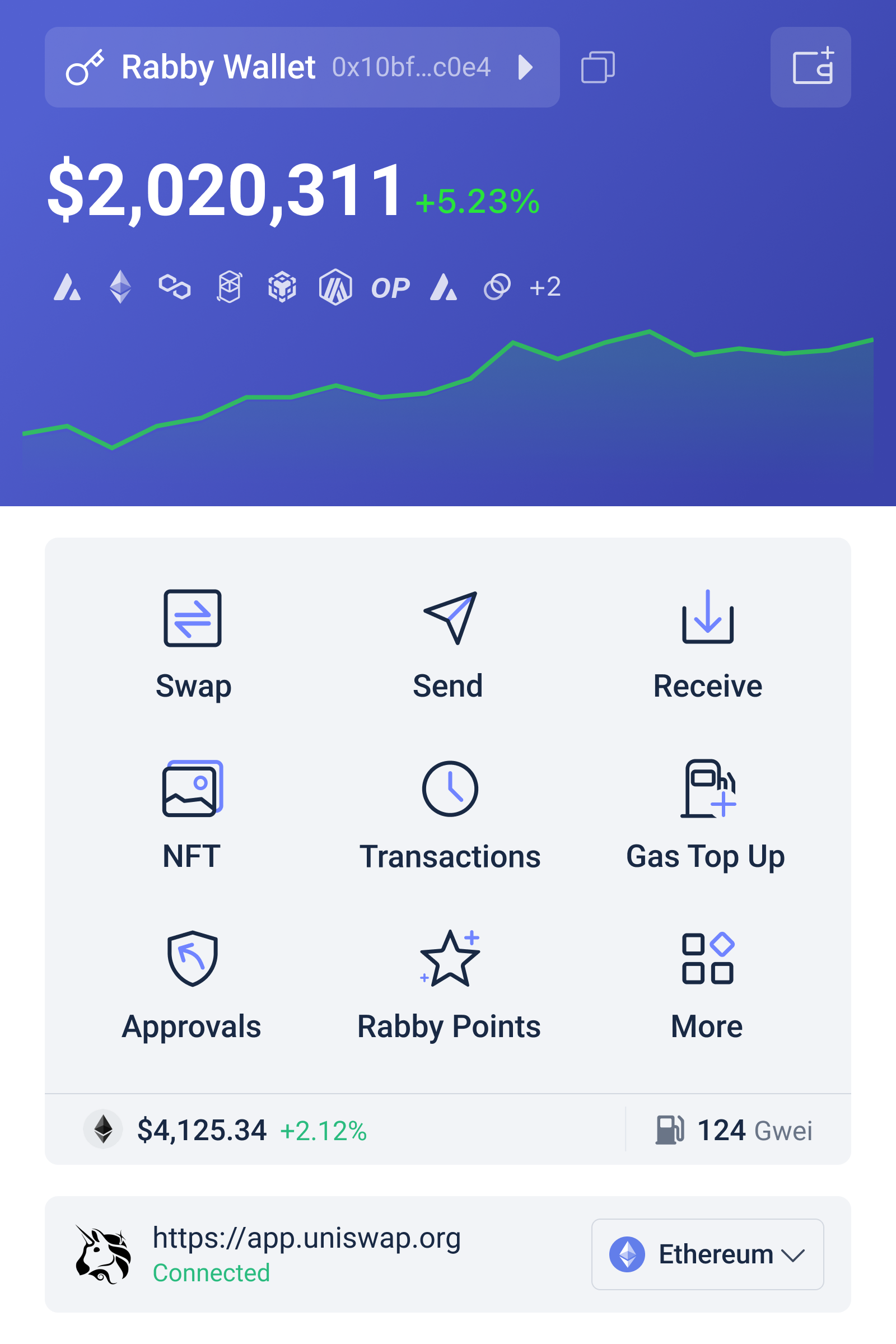
For users comparing advanced wallets, this is where a tool such as rabby wallet can be useful: not because a wallet can make every protocol safe, but because a richer signing screen can make protocol behavior easier to inspect before authorization. That distinction is important. The wallet is an analytical layer, not a substitute for understanding the application, network, or economic context.
Three approaches, three different sacrifices
Basic wallet confirmation
The simplest approach emphasizes speed and broad compatibility. It may be sufficient for low-value transfers to known addresses, especially when the user has independently verified the destination. Its weakness is informational: raw contract data and gas estimates rarely explain economic outcomes to a human. Convenience is gained by shifting interpretation back to the user.
Simulation-first wallet workflows
A simulation-first wallet attempts to translate contract calls into expected balance changes and warnings. This is often the best middle ground for active DeFi users because it preserves self-custody while improving visibility. The trade-off is that simulations depend on available chain data, protocol decoding, and the accuracy of the assumed state. A warning may be conservative, incomplete, or occasionally misleading when a protocol uses unusual logic.
Private routing and specialized execution
Private relays, protected transaction paths, and specialized execution systems can reduce the chance that a pending transaction is openly observed and exploited. They address a different part of the problem than simulation. However, users must consider who operates the routing service, whether the transaction can be censored or delayed, how failures are handled, and whether protection applies on the chosen network. Privacy can reduce one risk while introducing a new trust dependency.
The practical conclusion is not to choose one layer and ignore the others. A user might simulate a transaction, impose sensible slippage, use a private route where appropriate, and verify the contract and recipient independently. Security is a stack of partial defenses, not a single product feature.
Where transaction simulation breaks down
The main limitation is temporal. A simulation usually reflects a particular state, while the actual transaction executes later. If liquidity changes, an oracle updates, a position is liquidated, or another transaction is ordered first, the result may differ. Some protocols also contain conditional behavior that depends on block timing, external prices, or interactions occurring immediately before execution.
There is also a model risk. A wallet may correctly simulate what the contract does while still failing to judge whether the result is economically sensible. Receiving a token does not mean receiving value; depositing collateral may be valid but expose the user to liquidation; a successful bridge call may leave funds delayed or subject to separate operational risk.
These limits suggest a useful rule: treat simulation as a discrepancy detector, not a guarantee. If the preview says that a familiar swap will send an unexpected asset, grant an unlimited allowance, or interact with an unfamiliar address, stop and investigate. If everything looks normal, the transaction is not risk-free; it is simply more legible.
A reusable pre-signing framework
Before approving a meaningful DeFi transaction, inspect four dimensions. First, identity: is the chain, application, contract, recipient, and token what you intended? Second, permission: does the call grant an allowance or another capability that persists after the transaction? Third, outcome: do the simulated balance changes match the action you think you are taking? Fourth, execution: could slippage, ordering, gas conditions, or timing materially change the result?
This framework is deliberately simple because it is designed for use under pressure. It also exposes a common misconception: transaction security is not only about detecting malicious contracts. It is equally about detecting mismatches between user intention and machine execution. A legitimate protocol can produce a harmful transaction if the wrong pool, chain, asset, parameter, or approval is selected.
What to watch next
As DeFi interfaces become more complex, the value of wallets may increasingly lie in interpretation rather than key storage alone. The important signal will be whether simulation tools become more transparent about confidence, assumptions, and unsupported protocol behavior. A warning that explains its evidence is more useful than a generic red banner, while a clean result should show what was actually checked.
If private execution becomes more common, users will also need to compare visibility reduction with added infrastructure dependence. The strongest systems may combine clearer simulations, safer permission defaults, better transaction routing, and more intelligible explanations. That would not eliminate MEV. It could, however, make extraction harder to hide and mistakes less costly to repeat.
Frequently asked questions
Does transaction simulation completely prevent MEV?
No. Simulation previews likely contract effects, but it cannot guarantee transaction ordering, final liquidity, or execution price. MEV protection may also require slippage controls, private routing, or protocol-specific execution tools.
Is a successful simulation proof that a DeFi transaction is safe?
No. It is evidence about expected state changes, not a complete judgment about protocol solvency, token quality, oracle design, or future market conditions. Use the preview to detect surprises, then verify the application and parameters independently.
What should I check first in a wallet preview?
Start with outgoing and incoming assets, approval amounts, contract and recipient addresses, network selection, slippage, and whether the result matches your intent. Unexpected permissions or balance changes are reasons to pause before signing.
The most valuable MEV defense is not the promise that nothing can go wrong. It is a better decision boundary between an application’s request and the user’s signature. Transaction simulation makes that boundary more visible; careful execution choices make it more resilient. For US DeFi users navigating increasingly complicated protocols, that combination is less glamorous than a guarantee—but considerably more useful.