You are in a Chrome browser, a decentralized exchange is open, and the trade appears simple: connect a wallet, approve a transaction, and receive a Solana-based token. Yet the most important decision may have happened before the swap. Which wallet extension recognizes the application, displays the transaction clearly, protects signing authority, and still gives you enough control to notice when something is wrong? For US users exploring Solana DeFi, browser integration is not merely a convenience feature. It is part of the security model.
The central trade-off is easy to miss. A wallet that removes network switching and compresses several actions into one interface can reduce operational mistakes, but it can also make complex activity feel deceptively simple. Phantom is designed around that tension. It began as a Solana-focused wallet and now supports a broader set of networks, while alternatives such as MetaMask, Trust Wallet, and Solflare emphasize different balances between ecosystem depth, multi-chain breadth, mobile access, and specialized Solana functionality.
What browser integration actually changes
A browser wallet is an interface between a decentralized application, or dApp, and the blockchain. The dApp creates a request; the extension presents that request to the user; the user signs or rejects it; and the network processes the resulting transaction. The wallet does not turn a risky contract into a safe one. It controls how much of the risk becomes visible before approval.
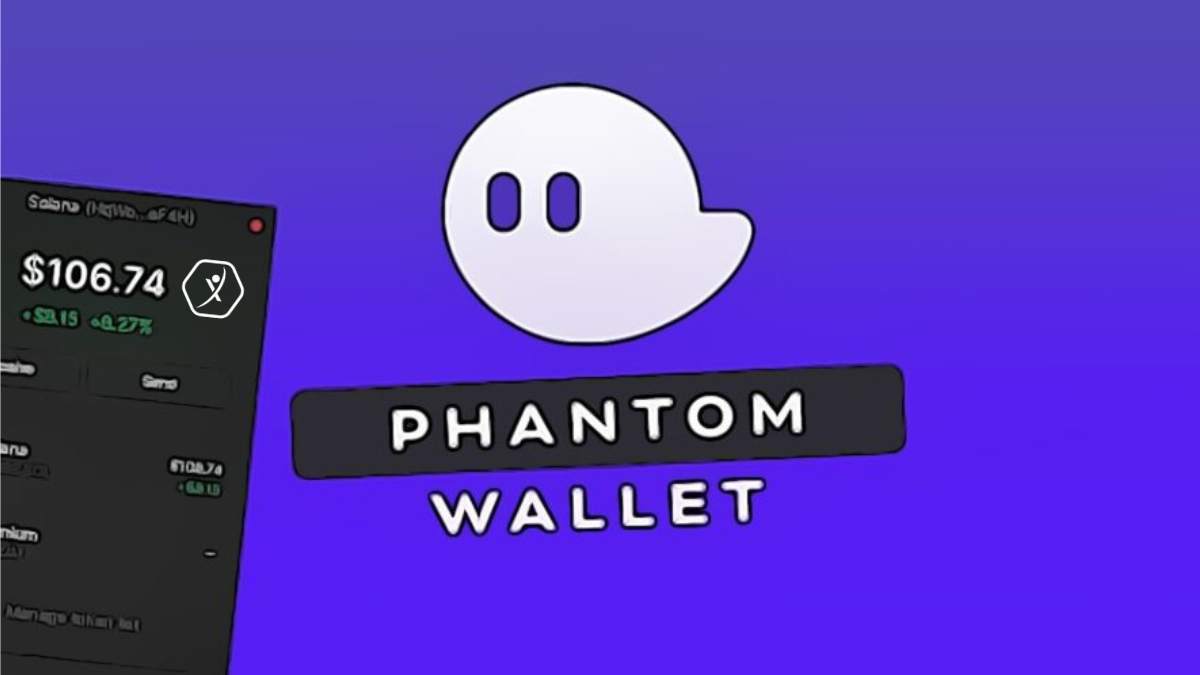
That distinction matters because many losses arise not from a failure of cryptography but from a failure of interpretation. A user may recognize a familiar token symbol while overlooking the destination address, the permissions being granted, or the assets leaving the wallet. Phantom’s transaction simulation is intended to function as a visual firewall: before signing, it shows the assets expected to enter or leave the wallet. This is useful because it shifts review from technical payloads toward an outcome a person can understand.
Simulation remains a defense, not a guarantee. It depends on what the application requests and how the wallet interprets that request. A clear-looking result should therefore be treated as evidence to examine, not as an automatic safety certificate. The practical rule is simple: if the displayed outcome does not match the action you intended, reject the request and investigate the site or contract.
Phantom versus MetaMask: Solana breadth against EVM familiarity
MetaMask is a natural choice for users whose primary activity occurs on Ethereum and other EVM-compatible networks. Its central advantage is ecosystem familiarity: many developers, applications, and users understand its connection model and account workflow. For an EVM-focused portfolio, that familiarity can outweigh the benefit of adopting another interface.
Phantom makes a different argument. Its architecture automatically detects the blockchain a supported dApp requires and can switch networks without the user manually adjusting settings. The wallet supports Solana as well as Ethereum, Bitcoin, Polygon, Base, Sui, and Monad in a single environment. For someone moving between Solana DeFi and selected non-Solana applications, that reduces a common source of friction: connecting to the wrong network or assuming that a token on one chain behaves like the similarly named token on another.
The limitation is conceptual as much as technical. Automatic detection reduces clicks, but it can also reduce the moments when a user pauses to identify which chain is involved. That is helpful for routine activity and potentially harmful for a novice who has not yet learned the difference between a network, a token, and a bridge. Phantom is therefore a strong fit for users who want broad browser access but are willing to keep checking chain context rather than treating automation as proof of correctness.
Phantom versus Trust Wallet: desktop workflow against mobile breadth
Trust Wallet is often attractive to users who organize their digital assets primarily through a mobile device and want extensive multi-chain coverage. That model fits an investor who checks balances, moves assets, or interacts with applications from a phone. Phantom also offers mobile applications for iOS and Android, but its Chrome extension is particularly relevant to users who conduct research and DeFi transactions in a desktop browser.
The browser can be a better analytical workspace. Multiple tabs make it easier to compare a protocol’s interface with wallet prompts, inspect token information, and verify that the domain is correct. The cost is that a desktop environment is not inherently safer. Fake extensions, phishing pages, malicious advertisements, and copied dApp interfaces can still exploit a user who approves too quickly.
For this comparison, the best choice depends less on a universal ranking than on the user’s operating pattern. Trust Wallet may suit a mobile-first holder seeking broad access. Phantom may suit a Chrome user who wants Solana DeFi close to the applications being used, together with staking, swapping, NFT management, and cross-chain access. Neither design removes the responsibility to protect recovery credentials.
Phantom versus Solflare: integrated breadth against Solana specialization
Solflare is a notable alternative for users who want a wallet dedicated to the Solana ecosystem. Specialization can be valuable. A narrower product scope may make Solana-specific concepts, assets, and workflows more central to the interface, which is appealing to users whose holdings and applications are almost entirely on Solana.
Phantom takes the opposite direction by combining Solana roots with a multi-chain interface. Its built-in swapper can support token trading across different blockchains and use route optimization intended to reduce slippage, the difference between an expected execution price and the final price. It also supports in-wallet staking, allowing SOL holders to delegate assets to validators without leaving the wallet interface. For users who want one browser extension for several activities, this consolidation is efficient.
Efficiency has a boundary. An integrated swap does not eliminate network fees, liquidity constraints, bridge risk, or price movement. “Low slippage” is an optimization objective, not a promise that every route is cheap or optimal in every market condition. Likewise, staking is not a savings account: delegated assets remain exposed to the economics and operational assumptions of the underlying network and validator arrangement. A convenient interface can organize these actions, but it cannot repeal their risks.
The security model: control is also responsibility
Phantom is non-custodial, meaning the user retains control of private keys and the 12-word secret recovery phrase. This is fundamentally different from leaving funds with a centralized service. A third party generally cannot freeze the wallet in the same way a custodian can, but the user also cannot rely on that third party to restore access after losing the recovery phrase. If the phrase is lost, funds may be permanently inaccessible.
For a Chrome extension, installation hygiene is part of custody. Users should obtain the extension through an official, carefully verified distribution path, inspect the publisher and permissions, and avoid entering a recovery phrase into a website, form, message, or support chat. A wallet company will not make a secret phrase safe to share. Hardware-wallet integration with Ledger adds another layer by keeping private keys offline while allowing interaction with Web3 applications, although the user must still verify what is being signed on the hardware device and in the wallet interface.
Phantom’s NFT gallery illustrates another useful distinction. Viewing metadata, listing collectibles, and burning spam NFTs can improve organization, but an unfamiliar NFT is not automatically harmless merely because it appears in a gallery. Airdropped assets can be used to lure users toward malicious websites or signatures. The safest response is often to avoid interacting with unsolicited items unless their origin and purpose are clear.
A practical decision framework for US browser users
Instead of asking which wallet is “best,” evaluate four questions. First, where will most transactions occur: Solana, EVM networks, mobile applications, or a mixture? Second, does the interface make the intended asset flow understandable before signing? Third, do you need a hardware wallet, in-wallet staking, NFT tools, or developer integrations? Fourth, can you maintain disciplined control of the recovery phrase and verify dApp domains?
For a Solana-oriented Chrome user who also expects to explore Ethereum, Base, Polygon, Bitcoin, Sui, or Monad, Phantom offers a coherent single-extension workflow. Its Phantom Connect SDK also gives developers ways to support authentication through the extension or social logins across React, React Native, and standard JavaScript applications. That may improve onboarding, but authentication convenience should not be confused with custody: a smoother sign-in flow does not remove the need to understand who controls the keys and what a transaction authorizes.
Users looking for the official browser installation should verify the source rather than relying on search advertisements or unsolicited messages. The phantom wallet page can serve as a starting point for locating the extension, but the same verification principle applies there: check the domain, avoid copying recovery phrases into web forms, and review every permission or signing request.
What to watch as wallet integration evolves
The next meaningful development in browser wallets is unlikely to be simply adding another supported chain. The more consequential question is whether interfaces can make complex, cross-chain actions legible without encouraging blind approval. Automatic chain detection, route optimization, transaction simulation, privacy-conscious design, and hardware-wallet support all address parts of that problem, but they do not solve it completely.
If simulations become more accurate and dApps present clearer intent, users may be able to evaluate transactions by outcome rather than by unfamiliar technical data. If multi-chain interfaces continue expanding, however, the cost of misunderstanding network identity may also rise. The signal worth watching is not the number of chains listed in a wallet. It is whether the product helps users distinguish a legitimate convenience from an irreversible action.
Frequently asked questions
Is Phantom suitable for Solana DeFi in Chrome?
It can be suitable for users who want a browser-based Solana workflow with automatic chain detection, transaction simulation, swapping, staking, NFT management, and support for additional networks. Its suitability depends on the dApps used and the user’s ability to verify sites and signing requests.
Is Phantom safer than MetaMask, Trust Wallet, or Solflare?
There is no universal answer. Each wallet emphasizes a different ecosystem and workflow. Safety depends on software integrity, recovery-phrase protection, phishing awareness, transaction review, and—where appropriate—hardware-wallet use. A feature-rich interface can reduce some mistakes while creating new opportunities for overconfidence.
Does transaction simulation guarantee that a DeFi transaction is safe?
No. Simulation can clarify expected asset movements before signing, but it cannot make an unknown website trustworthy or eliminate smart-contract, market, bridge, or user-interface risk. Treat the simulation as a review aid and reject any result that does not match the intended action.
The strongest browser wallet is not the one that hides complexity most completely. It is the one that reduces unnecessary friction while making consequential complexity visible at the moment it matters. For Solana DeFi users, Phantom’s advantage is its attempt to combine Solana specialization with multi-chain browser access. Its limitation is the same one shared by every non-custodial wallet: convenience can assist judgment, but it cannot replace it.